
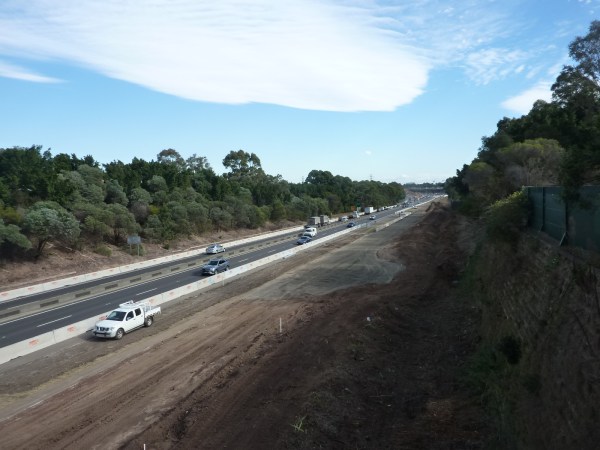
The widening of the M4 motorway at Homebush and extension of the motorway from Strathfield to the City West link was the final stage in the continuing development of Sydney’s Western Expressway. Parts of this road were formerly named the F4 Western Freeway, M4 Motorway and is now known as WestConnex Project. It is astonishing to learn that the origins of this project date back nearly 70 years. This is a brief summary of previous plans and works.
In 1947, planning for the Western Expressway commenced as the County of Cumberland Planning Scheme was being prepared. The scheme outlined a Western Freeway plan linking the central business district of Sydney to Penrith then on to the state’s west via The Blue Mountains.
In 1951, the skeleton of this system was incorporated as part of the county of Cumberland Planning Scheme adopted by the NSW Parliament in 1951.
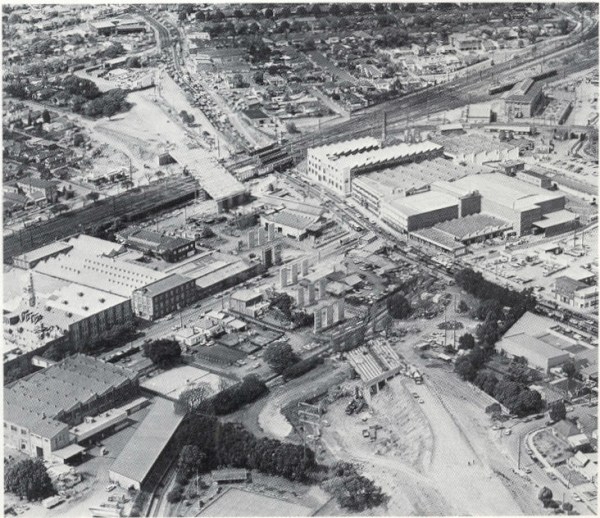
In the original plan the road ran from Sydney to the Great Western Highway at Lapstone, passing through Glebe, Haberfield, and Five Dock before joining the current route at Strathfield. In the early 1970s, the first section between Prospect to Penrith was completed. The more difficult section was the next stage from Strathfield passing through Homebush, which involved acquisition of land and houses in streets such as Underwood Road, Wentworth Street and Short Street Homebush.
One of these houses was ‘Pomeroy House’ (formerly ‘Laira’) in Wentworth Road, a grand Victorian mansion built for John Pomeroy, a partner in David Jones & Co, in the 1880s. The National Trust classified Pomeroy House in the early 1970’s but it was demolished amid much controversy to make way for the F4 Expressway. The demolition of this house highlighted the absence of legislative protection for historic properties in NSW. The first Heritage Act in NSW was implemented in 1977. Ironically, the final plan for the road avoided the site on which Pomeroy House was built.
Construction commenced in 1971 on the eastern end at Saleyards Creek, Homebush and James Ruse Drive Granville which mainly involved construction of bridgeworks to carry the expressway over existing roadways. Twelve bridges were completed by mid-1977 and a further twelve between 1978 and 1982.
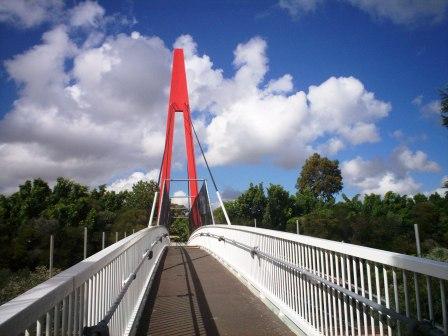
This included a cable-stayed, steel box-girder pedestrian bridge at Pomeroy Street Homebush, the first of its type in NSW. The bridge uses cables, running from a tower above the bridge to given additional support to bridge spans. This enables much longer spans to be used without the need for additional supporting piers. The bridge has two spans with a total length of 67.6 metres. This bridge provides bicycle and pedestrian access across the expressway (now M4) and is part of the Bay-to-Bay pathway from Botany Bay to Homebush running mainly along the Cooks River. The section of the expressway which travels over George Street Homebush and the northern railway between Strathfield and North Strathfield rail stations is a 336 metre, 12 span viaduct.
The building of the expressway involved changed alignments and names in Homebush. Short Street was divided into Short Street east and Short Street west. Wentworth Street was divided by the Expressway, the street south of the expressway was renamed Park Road and all the properties were renumbered.
The F4 Western Freeway from Strathfield to Auburn was opened on 16 December 1982 by the NSW Premier Neville Wran. The road was originally planned to continue from Strathfield to Sydney. However, on the basis of a pre-election promise, the NSW Premier Neville Wran terminated the plan. All land reserved for the expressway between Pyrmont and Strathfield was sold off to property developers or declassified in 1977 as a freeway corridor by the State Government. However, while no doubt this decision was popular to residents affected by the proposed freeway, the abrupt termination of the expressway at Parramatta Road Strathfield created a major traffic bottleneck at Strathfield and a significant gap in Sydney’s major road networks, especially between Strathfield and Five Dock/Haberfield, where the City West Link commences. This was often called ‘the missing link’.
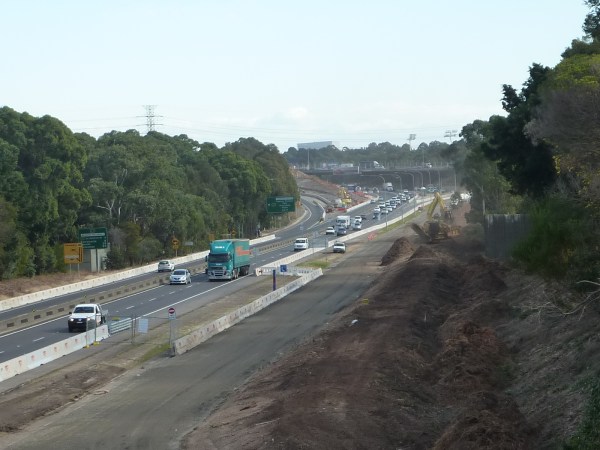
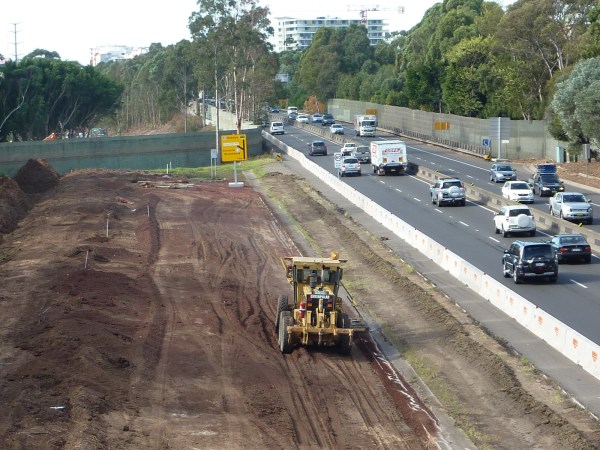
Major work commenced in 2016 on the M4 East construction to complete the ‘missing link’. The M4 East was delivered as a 7 km project, including a 5.5 km tunnel with three lanes in each direction from the M4 at North Strathfield/Homebush to Parramatta Road and the City West Link at Haberfield. The tunnel opened to traffic in 2019.
The M4 East was later connected into the broader WestConnex network through the M4–M8 Link and Rozelle Interchange, extending the M4 corridor further east and linking it with the M8, Victoria Road and the Anzac Bridge network. The road network is now known as the WestConnex.
Discover more from Strathfield Heritage
Subscribe to get the latest posts sent to your email.

Very interesting! Many thanks, Alex.
LikeLike